
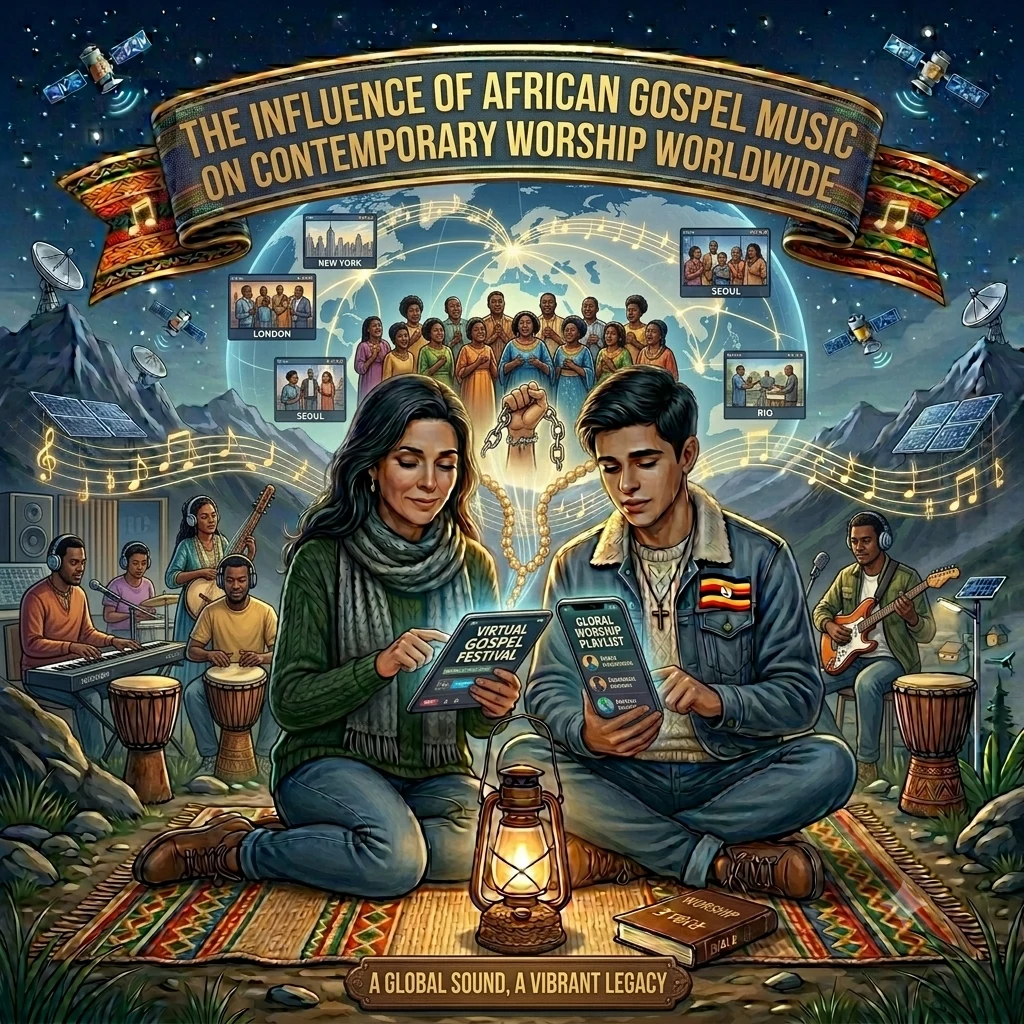
Something remarkable has been happening in churches, concert halls, and worship spaces around the world over the past two decades. A sound that was once considered regional — distinctly African, deeply rooted in the rhythms, languages, and spiritual traditions of the continent — has quietly but powerfully made its way onto the global worship stage.
Something remarkable has been happening in churches, concert halls, and worship spaces around the world over the past two decades. A sound that was once considered regional — distinctly African, deeply rooted in the rhythms, languages, and spiritual traditions of the continent — has quietly but powerfully made its way onto the global worship stage.
African gospel music is no longer just a local phenomenon. It is a global force. From megachurches in the United States to worship gatherings in Europe, from South Korean congregations to Brazilian revival meetings, the influence of African gospel music on contemporary worship worldwide is undeniable, far-reaching, and still growing.
In this article, we explore how African gospel music has shaped the sound, style, and spirit of contemporary worship around the world — and why its influence shows no signs of slowing down.
A Sound Born from Depth
To understand the global influence of African gospel music, you first need to understand what makes it so uniquely powerful. African gospel music is not just music — it is the overflow of a faith that has been tested, refined, and proven through generations of real-life experience.
Africa has known suffering. It has known injustice, poverty, loss, and struggle on a scale that is difficult to fully comprehend. And yet from the depths of that suffering has emerged a worship tradition of extraordinary joy, resilience, and spiritual depth. African gospel music carries the weight of that history — and it is precisely that weight, that authenticity, that depth of genuine faith expressed through music, that has made it so universally resonant.
When people around the world hear African gospel music — whether they understand the language or not — they feel something. They encounter a worship that is unashamedly passionate, spiritually alive, and rooted in a faith that has been tried and found true. That quality is rare. And it is magnetic.
Sinach and the Global Worship Moment
No conversation about African gospel music's global influence is complete without discussing Sinach and the phenomenon of Way Maker. Written and recorded by Nigerian gospel artist Sinach, Way Maker became one of the most sung worship songs in the world — translated into dozens of languages and performed in churches on every continent.
Way Maker did not just cross borders — it dissolved them. It proved beyond any reasonable doubt that an African gospel song could capture the hearts of worshippers in Alabama and Amsterdam, in Seoul and São Paulo, in Sydney and Stockholm. It demonstrated that the anointing on African gospel music transcends language, culture, and geography in ways that few other musical traditions can match.
Sinach's global success opened doors and changed perceptions — both within the global church and within the music industry — about the reach and relevance of African gospel music on the world stage.
The African Worship Sound in Global Churches
Beyond individual breakthrough moments like Way Maker, the broader African gospel sound has been quietly but consistently shaping the texture of contemporary worship in churches around the world.
The rhythmic energy, the call-and-response patterns, the emphasis on congregational participation, the unapologetic expressiveness in worship — these distinctly African worship characteristics are now visible in churches far beyond the continent. Worship leaders and music directors in the United States, the United Kingdom, Australia, and across Europe have increasingly drawn from African gospel music's stylistic toolkit, incorporating its rhythms, its energy, and its communal spirit into their own worship experiences.
Many of the world's most influential contemporary worship movements — including Hillsong, Elevation Worship, and Bethel Music — have featured African gospel influences in their music, collaborated with African gospel artists, and drawn inspiration from the African worship tradition in shaping their own sound.
The African Diaspora as a Bridge
One of the most significant factors in the global spread of African gospel music's influence has been the African diaspora — the tens of millions of Africans living outside the continent in Europe, North America, and beyond. African diaspora communities have carried their worship culture with them wherever they have settled, establishing churches, worship communities, and gospel music scenes that have introduced African gospel music to entirely new audiences.
In cities like London, New York, Paris, and Toronto — home to large and vibrant African diaspora communities — African gospel music has become a significant presence in the broader worship landscape. African-led churches in these cities have grown rapidly, attracting not just African worshippers but people from all backgrounds who have been drawn to the authenticity, energy, and spiritual depth of African worship.
This diaspora influence has been a powerful and often underappreciated bridge between African gospel music and the global church.
Digital Platforms and the Acceleration of Influence
The rise of digital streaming platforms and social media has dramatically accelerated the global reach of African gospel music's influence. Songs that might once have taken years to travel from Lagos or Nairobi to London or Los Angeles now cross the world in hours — shared, streamed, and worshipped to by listeners who may never have set foot on African soil.
YouTube has been particularly transformative. African gospel artists with millions of YouTube subscribers — Sinach, Mercy Chinwo, Nathaniel Bassey, Guardian Angel, and many others — have built genuinely global audiences that engage with their music daily, incorporate their songs into personal and corporate worship, and spread their influence through shares, covers, and recommendations.
This digital acceleration means that the influence of African gospel music on global contemporary worship is not just a past or present reality — it is a future that is growing more significant with every passing year.
What the World Is Learning from African Worship
Beyond the music itself, the global church is learning something deeper and more valuable from Africa's worship tradition — a lesson about what genuine, unrestrained, wholehearted worship actually looks like.
In many Western worship contexts, there has been a long-standing tendency toward restraint — a certain cultural discomfort with overt emotional expression in worship. African gospel music challenges that tendency powerfully. It models a worship that is physically engaged, emotionally honest, communally participatory, and completely unashamed in its expression of love and gratitude toward God.
As that model continues to influence worship communities around the world, it is not just changing the sound of global worship — it is changing its spirit. It is inviting the global church into a deeper, freer, more wholehearted experience of what worship was always meant to be.
Conclusion
The influence of African gospel music on contemporary worship worldwide is one of the most significant and underreported stories in the modern history of Christian music. From the global phenomenon of Way Maker to the quiet but consistent shaping of worship culture in churches on every continent, African gospel music has already changed the world of worship in profound ways — and its most influential chapters may still be ahead.
As Africa continues to rise — in population, in global influence, and in the extraordinary creativity and faith of its gospel artists — the world will only hear more of its worship sound. And the global church will be richer, deeper, and more alive for it.