
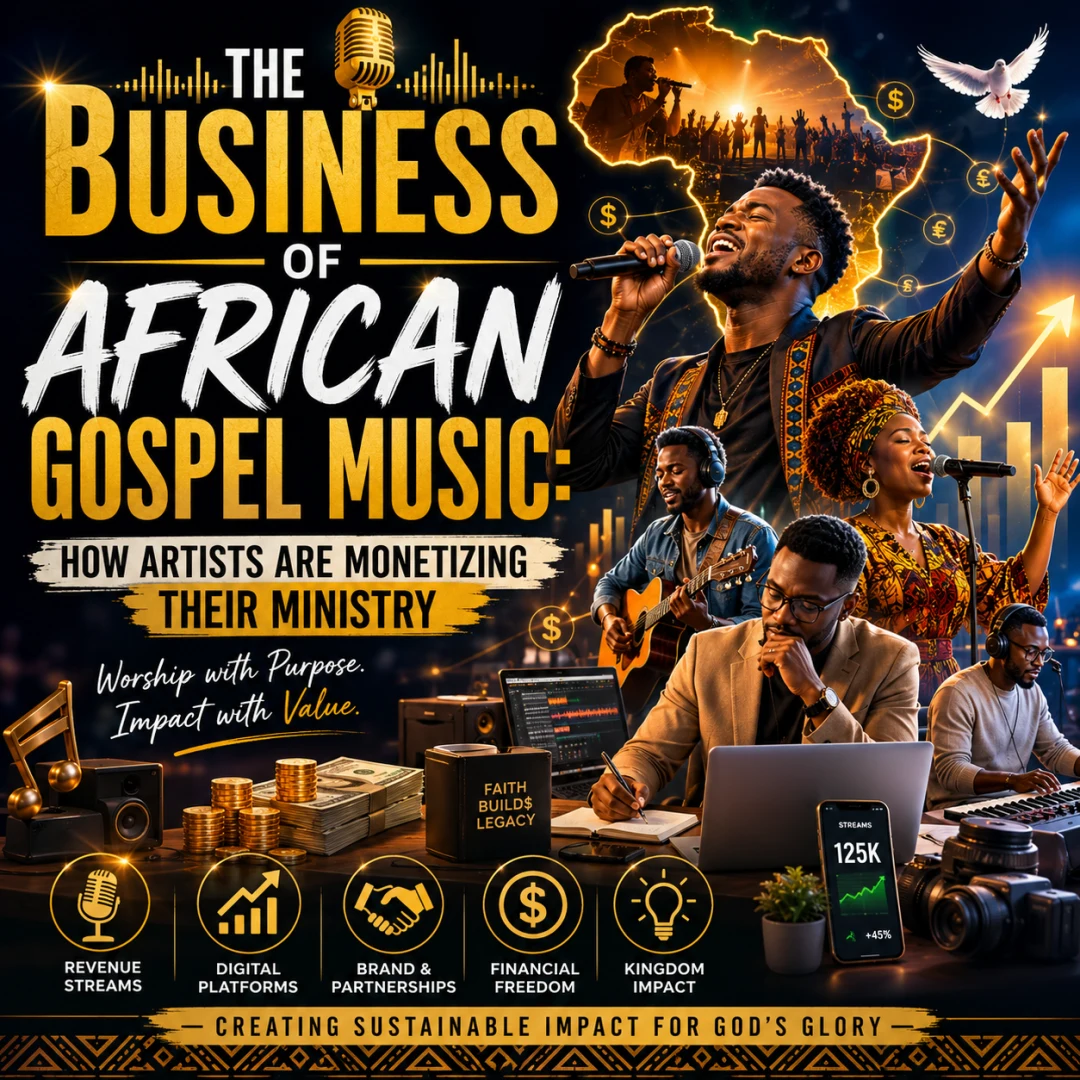
For many African gospel artists, music is first and foremost a calling — a divine mandate to spread the message of faith, hope, and worship. But in today's rapidly evolving music industry, ministry and business are no longer mutually exclusive. Across the continent, African gospel artists are finding innovative and inspiring ways to monetize their music while staying true to their spiritual mission.
For many African gospel artists, music is first and foremost a calling — a divine mandate to spread the message of faith, hope, and worship. But in today's rapidly evolving music industry, ministry and business are no longer mutually exclusive. Across the continent, African gospel artists are finding innovative and inspiring ways to monetize their music while staying true to their spiritual mission.
From streaming platforms to merchandise, live concerts to brand partnerships, the business of African gospel music is growing fast — and the artists leading the charge are proving that you can serve God and build a sustainable career at the same time.
The Old Model vs The New Model
For decades, African gospel artists relied almost entirely on album sales, church performances, and offerings to sustain their ministries. Record labels — mostly church-affiliated — controlled distribution, and artists had little say over how their music reached audiences or how revenue was generated.
That model has changed dramatically. The rise of digital technology, social media, and global streaming platforms has given African gospel artists unprecedented control over their music, their brand, and their income. Today, an independent gospel artist in Lagos, Nairobi, or Kampala can reach millions of listeners worldwide without a record label, a distributor, or a major budget.
Streaming Platforms: The New Collection Plate
Streaming platforms like Spotify, Apple Music, YouTube Music, and Boomplay have become essential income streams for African gospel artists. Every stream generates a small royalty payment, and with millions of gospel music fans across Africa and the diaspora, those payments can add up significantly.
YouTube in particular has been transformative. Artists like Sinach, Mercy Chinwo, and Guardian Angel have amassed tens of millions of views on their YouTube channels, generating substantial advertising revenue alongside their streaming royalties. YouTube's monetization program allows artists to earn directly from their content, making it one of the most accessible income streams for gospel artists at every level.
Boomplay, Africa's largest music streaming platform, has also emerged as a critical platform for African gospel artists. With over 90 million users across the continent, Boomplay offers gospel artists direct access to a massive African audience that other global platforms often underserve.
Live Performances and Concerts
Despite the rise of digital platforms, live performances remain one of the most lucrative income streams for African gospel artists. Gospel concerts draw massive crowds across the continent, from intimate church events to stadium-filling celebrations of worship.
Artists like Sinach, Nathaniel Bassey, and Pitson have built thriving performance careers, headlining gospel concerts not just in Africa but in Europe, North America, and beyond. The African diaspora, in particular, represents a huge and largely untapped market for live African gospel music performances.
Beyond concerts, many gospel artists are also regular speakers and worship leaders at conferences, crusades, and church events — earning appearance fees that supplement their music income significantly.
Merchandise and Brand Building
A growing number of African gospel artists are extending their brand beyond music into merchandise. T-shirts, caps, devotional books, journals, and other branded items allow artists to connect with their fans on a deeper level while generating additional income.
Artists like Sinach and Mercy Chinwo have built powerful personal brands that extend well beyond their music. Their names, images, and messages carry significant commercial value — value that can be leveraged through merchandise, endorsements, and partnerships.
Digital Products and Online Ministries
The internet has opened up a whole new world of monetization opportunities for African gospel artists through digital products and online ministries. Many artists now offer:
- Online courses on worship, music production, and ministry
- Devotional content and Bible study materials sold as eBooks or subscriptions
- Exclusive content through platforms like Patreon, where fans pay a monthly fee for behind-the-scenes access, early releases, and personal interaction with their favorite artists
- Webinars and virtual concerts that reach global audiences without the cost of international travel
These digital products allow gospel artists to monetize their knowledge, experience, and spiritual gifts in ways that go far beyond traditional music sales.
Brand Partnerships and Endorsements
As African gospel artists build larger and more engaged audiences, brands are increasingly recognizing their commercial value. Gospel artists with strong social media followings are being approached for endorsement deals, brand partnerships, and sponsored content — particularly in sectors like fashion, food, and lifestyle.
For gospel artists, brand partnerships require careful discernment — choosing partners whose values align with their faith and ministry. But when done right, brand partnerships can provide significant income while expanding an artist's reach to new audiences.
Music Publishing and Licensing
One of the most underutilized income streams for African gospel artists is music publishing and licensing. When a gospel song is used in a film, TV show, advertisement, or other commercial project, the artist earns a licensing fee. Similarly, when other artists cover or record a gospel song, the original songwriter earns publishing royalties.
Organizations like MCSK in Kenya, COSON in Nigeria, and UPRS in Uganda help artists collect these royalties — but many African gospel artists are still unaware of these income streams or have not registered their music for protection and collection.
The Importance of Financial Literacy
One of the biggest challenges facing African gospel artists today is financial literacy. Many artists are gifted musicians and powerful ministers but have little knowledge of the business side of music — contracts, royalties, copyright, and financial planning.
A growing number of music business educators and organizations across Africa are working to address this gap, offering workshops, online courses, and mentorship programs specifically designed for gospel artists. Artists who invest in financial education are far better positioned to build sustainable, long-term careers in ministry and music.
Conclusion
The business of African gospel music is evolving rapidly, and the artists who are thriving are those who have embraced both the spiritual and commercial dimensions of their calling. From streaming platforms and live concerts to digital products and brand partnerships, the opportunities for African gospel artists to build sustainable, impactful ministries have never been greater.
Ministry and business are not opposites — they are partners. When African gospel artists learn to steward their gifts wisely, they not only sustain their own ministries but amplify their message to reach more souls across the continent and around the world.